How Order and Sequence Shape the Way Dogs Learn
August 14, 2026 · 4 min read
Every dog training method you've ever heard of is doing the same basic principle underneath. Applied behavior analysis has a technical way of describing it, but strip away the jargon and it's simple: your dog's brain is building a network of connections that boil down to if this happens, I do that, and every connection gets stronger each time it's followed by something rewarding.
That's the entire mechanism behind every trained, or learned, behavior your dog has ever picked up, from sit to recall to jumping on the counter the second you turn your back.
One of the single most important pieces of changing a dog's behavior isn't the treat, the cue word, or the number of reps. It's the order of the behavior chain. Get the sequence of stimulus, action, and reward right, and you're building the exact neural pathway you meant to. Get it backwards, and you're not just failing to build the behavior you want. You're actively strengthening the one you don't, even while every individual piece looks like good training.
Let's look at a practical example.
Crate Training 101: Building Positive Association with the Crate
The version that backfires
Samantha wants her dog comfortable in his crate, so she sets up to work on some training: she walks him over to the crate, asks him to go inside, tosses a treat inside, and he trots in after it.
It looks like it's working. He's going in the crate. He's getting a treat. What could be backwards about that?
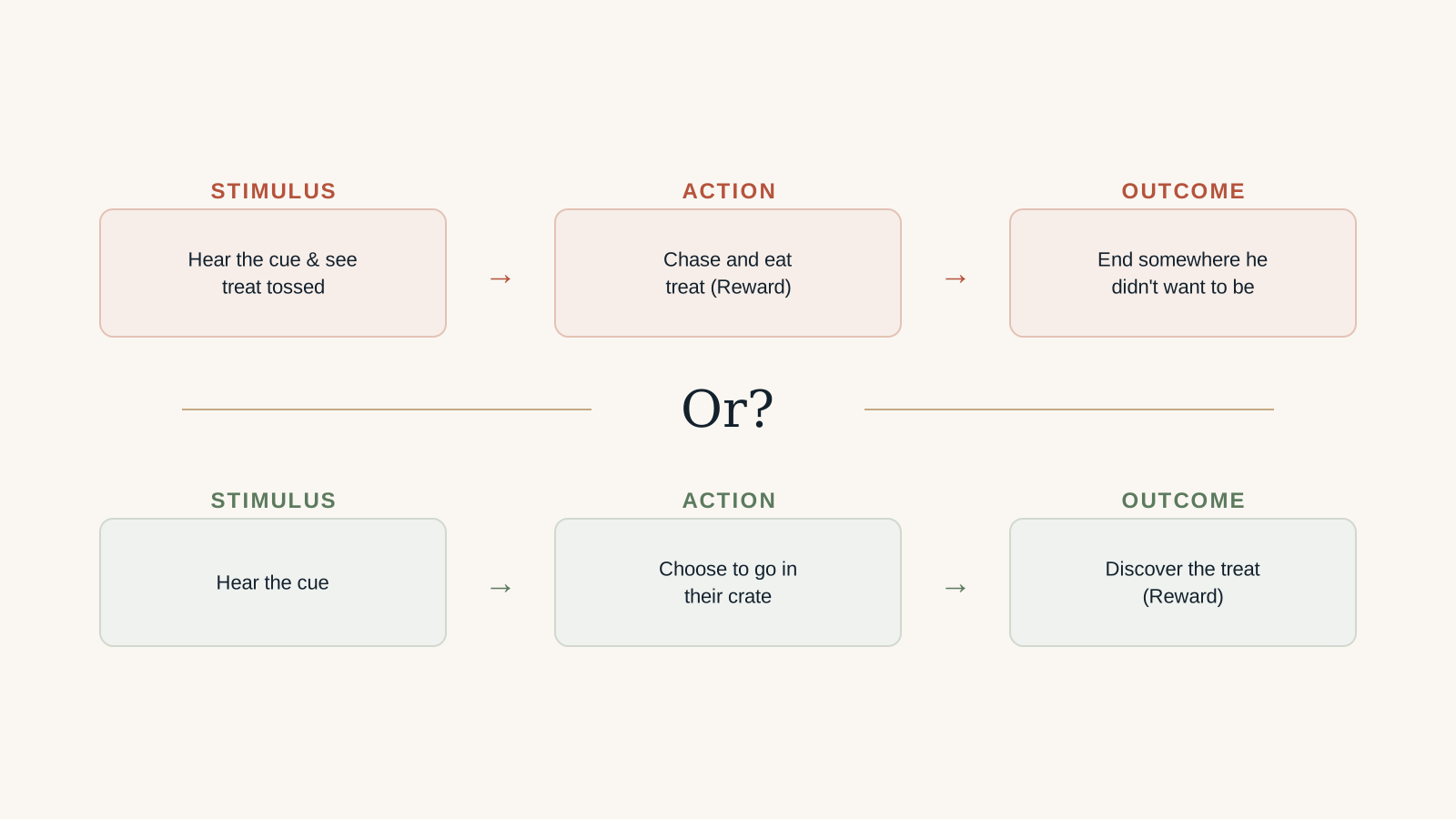
Look at the actual order of events from her dog's side, and the behavior chain reads:
Stimulus
Hear the cue & see treat tossed
Action
Chase and eat treat (Reward)
Outcome
End somewhere he didn't want to be
Stimulus
Hear the cue & see treat tossed
Action
Chase and eat treat (Reward)
Outcome
End somewhere he didn't want to be
The reward isn't reinforcing "the crate is good." It's landing right before the part he actually experiences, which is being shut in a small space he had no say in entering. Over time, the treat stops meaning "good things happen here" and starts meaning "something's about to happen to me." Every repetition doesn't build comfort with the crate. It quietly erodes it, and it teaches him to be a little wary of treats near the crate specifically, which is the opposite of the plan.
The version that works
With a trainer's eyes on the same situation, Samantha runs it differently.
Before her dog is anywhere near the crate, she hides a few treats in the back of it. Then she brings him over and asks, once, for him to go in.
One of the important parts here is that her dog now has to make a choice, AKA pick the neural pathway being built to go into the crate. Nobody is putting him in, and he's not simply chasing food. He hears the ask, decides to go investigate, and finds the reward waiting once he's already inside, on his own terms.
The behavior chain his brain is actually building now reads:
Stimulus
Hear the cue
Action
Choose to go in their crate
Outcome
Discover the treat (Reward)
Stimulus
Hear the cue
Action
Choose to go in their crate
Outcome
Discover the treat (Reward)
That's an entirely different pathway than the first version, built from the same crate, the same treats, and almost the same fifteen seconds. The only thing that changed was the order.
Repeat that a handful of times and something durable starts to form. The choice to go in gets reinforced a little more each time, until "go to the crate" isn't something Samantha has to even ask for. It's just the pathway his brain reaches for first.
A trained behavior isn't a trick a dog performs. It's a pathway his brain has learned to reach for, one repetition at a time.
Why this is worth having a trainer for
The unsettling part is how similar the two versions look from across the room. Same dog, same crate, same treats, same person trying her best. One of them is quietly building trust in the crate. The other is quietly building distrust of the very reward that was supposed to build it. Nothing about watching either scene tells you which one you're looking at unless you already know to check the order.
That's the actual work during an in-home session: not handing out treats, but constantly tracking the sequence a dog is experiencing and catching the moment it's about to run backwards, before it has a chance to teach the wrong lesson. It's a small thing to get right and an easy thing to get wrong, and it's often the entire difference between a dog who improves in days and one who seems to be "not food motivated" after months of treats being handed out at the wrong time.