Timing Is Everything: Why Milliseconds Matter in Dog Training
August 16, 2026 · 5 min read
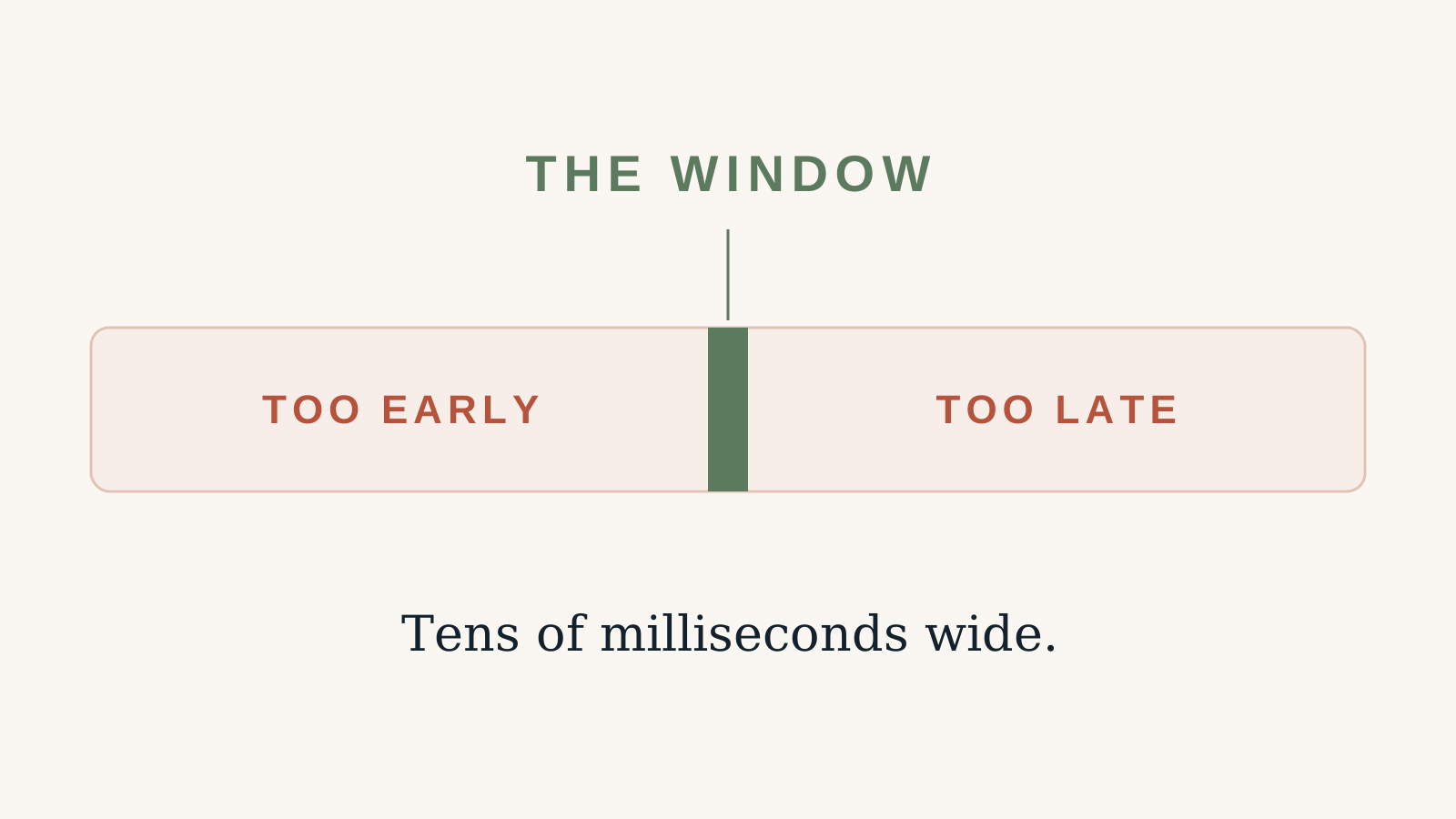
Watch a skilled trainer work and a lot of what's actually doing the work is probably the part you won't notice. It isn't the treats, or the tone of voice, or some special way of holding the leash. It's that they're working on a completely different clock than you are.
Decades of hands-on experience buy a lot of things, and high on that list is this: the ability to see a moment that lasts milliseconds, and to act inside it.
That isn't a figure of speech. The window between your dog thinking about something and your dog doing it is often tens of milliseconds wide. Land inside that window and you're shaping the thought itself.
What we actually mean by timing
Timing is identifying and capturing the exact instant your dog's mind shifts gears.
Not the moment they sit. The moment they decide to. Not the moment they lunge. The moment the thought of lunging forms. Dogs telegraph these shifts constantly, in the ears, the weight distribution, the breath, the flick of attention. Learning to see them is most of the job, and it's why a trainer can seem to respond to something that hasn't happened yet.
Once you can see those moments, you use them everywhere: deciding when to reward, when to keep walking during leash training, when to interrupt a thought pattern before it becomes bad behavior, and when to address anxiety in the split second before it gets too heavy for any learning to happen at all.
Timing in rewards based training
In Part One of this series we looked at how the order of a behavior chain decides what your dog actually learns. Timing is the sharper edge of the same blade. Reward a half second late and you haven't reinforced the sit, you've reinforced whatever your dog's mind jumped to next: the glance at the door, the shift of weight toward standing, the sniff at your pocket. Your dog is always learning something in that moment. The only question is whether it's what you're trying to teach. Precise timing is the entire difference between building the behavior you wanted and quietly building a slightly different one, over and over, until you're wondering why the sit keeps falling apart.
Timing in leash training
Leash training gets dramatically easier once you learn to use precise timing to build cooperation. Dogs have an instinctual need to explore, and a walk that gives them real room to sniff, wander, and take in the world at their own pace is a walk that genuinely fulfills them. Once that need is met, your dog will show you: the nose lifts, the weight shifts back, and their attention moves from the scent to looking to find what comes next. Capturing that exact moment to guide them forward is what makes a walk cooperative, because you're moving with your dog's attention rather than against it. Ask a few milliseconds too early and you're interrupting their fulfillment. Ask a few milliseconds too late and the moment has passed, and you're back to pulling.
Timing your way out of bad behavior
Almost every unwanted behavior has a runway before it where your dog is thinking through the steps to take action. The counter surf starts as a small glance up toward food items left out and the thought of how they can be obtained. Jumping on guests starts the moment your dog's focus locks onto the person walking in and their body tightens, long before a single paw leaves the ground. Even a failed recall has one: that split second where your dog pauses and you can see them weighing whether to come back to you or take off after whatever has their attention.
You can still influence this
The thought forms
Early physical signs
Behavior happens
Management only
You can still influence this
Management only
The thought forms
Early physical signs
Behavior happens
What good trainers do is address the thought in that early formation stage, repeatedly and consistently, rather than waiting for the behavior to fully arrive. Get the timing right and you're not fighting your dog at all, you're stepping in while the decision is still forming and guiding them to a better one. Rewarding that better decision builds the neural pathway you want to strengthen instead of managing the one you don't.
By the time it's behavior, all you can do is manage it. While it's still just a thought, you can actually influence it.
Timing in reactivity work
This is where timing matters most, and where the margin is thinnest.
Making progress with a reactive dog involves finding the exact moment they've registered the stimulus, the other dog or the bike or the stranger, but are still under the anxiety threshold where learning is possible. That's the whole window. A few milliseconds too early and they haven't actually processed the trigger yet, and you're just handing out rewards with no association being made. A few milliseconds too late and they've crossed into a level of arousal where the thinking part of the brain has effectively gone offline, no amount of treats will teach them anything until they've come back down.
Everything productive in reactivity work happens in that very narrow band. It's why progress with reactive dogs can look almost miraculous in skilled hands and become completely stalled in others. For a reactive dog, that window is the difference between an outing that builds real confidence and one that sets them back weeks.
Why we teach this directly
Precise timing runs through everything: rewards, leash work, influencing bad decisions before they happen, and giving a reactive dog room to learn instead of just cope. It is often the least visible skill in dog training while also being one of the most influential.
It can be genuinely hard to teach for many trainers, which is why a lot of programs skip past getting to know your dog's timing and hand you a generic protocol instead. We think that's backwards. A perfect plan executed a second late isn't a perfect plan anymore. That's why we spend real time in our in-home sessions working on your timing directly: what to watch for in your own dog, when to move, when to wait, and exactly when to take advantage of that open window before it closes.
It takes education to understand what to look for, and practice to actually react to it in real time. That's exactly what our in-home sessions are built to teach.